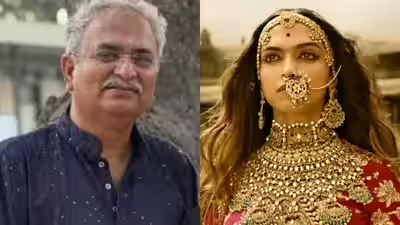
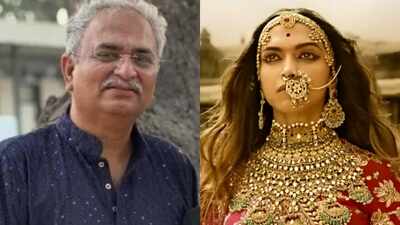
The debate over the Jauhar sequence in Sanjay Leela Bhansali’s ‘Padmaavat’ has resurfaced after Swara Bhasker questioned its depiction. Prakash Kapadia, who co-wrote the period drama with Sanjay Leela Bhansali, has now defended the filmmakers’ approach.Prakash Kapadia said the team based the film on research and historical sources. He maintained that the controversial sequence reflected the circumstances of the period portrayed in the movie. “We made the film according to our research and what is written in history books,” Kapadia said while speaking to the Hindustan Times. The writer also stressed that viewers can interpret a film in different ways. However, he said the Jauhar sequence represented the harsh realities faced during that period. “Every person interprets the film differently. What we showed, including the jauhar scene, was the reality of those times; it cannot be changed now. The situation was that of ‘do or die’. Woh log (the male warriors) kesariya kar ke utare thhe.”
Prakash Kapadia defends the Jauhar depiction
Prakash Kapadia’s comments come amid renewed criticism of how Jauhar was presented in ‘Padmaavat’. Swara Bhasker had described the portrayal as problematic, leading to discussions around the film’s treatment of history. Prakash Kapadia said he had not been closely following Swara Bhasker’s comments. He also suggested that people approach movies with different expectations and attitudes.He added, “It depends on the person’s mood; even if it’s a good film and you watch it with a bad state of mind, you will find it bekaar. It’s also about intention; whether you are going as a viewer, or watching it to find something controversial, or to find negativity… With Padmaavat, people had raised objections even before watching the film and had protested on the streets. The same conversation is continuing years later, so what can I say? Let people say what they want to.“
What does Kesariya mean?
Prakash Kapadia also referred to the practice of male warriors wearing saffron before entering battles they were unlikely to survive. This tradition is commonly associated with Rajput warfare and is known as Kesariya. The practice represented a final battle in circumstances where victory was considered impossible. The men would enter combat prepared to fight until death. The Jauhar sequence in ‘Padmaavat’ was presented alongside this historical context. Prakash Kapadia argued that such elements were part of the reality the filmmakers were attempting to portray.
‘Padmaavat’ faced controversy before release
‘Padmaavat’ was surrounded by controversy long before its theatrical release. Several groups raised objections to the movie during its production and before audiences could watch the finished film. Protests were held in different parts of the country. The controversy focused on the film’s portrayal of Rajput history and its central characters. Despite the disputes, ‘Padmaavat’ eventually reached cinemas in 2018. The movie starred Deepika Padukone as Rani Padmavati, Shahid Kapoor as Maharawal Ratan Singh and Ranveer Singh as Alauddin Khilji. The film was inspired by Malik Muhammad Jayasi’s 16th-century epic poem ‘Padmavat’.
Prakash Kapadia’s association with historical films
Prakash Kapadia has worked extensively on films that draw from history and mythology. His writing credits include Sanjay Leela Bhansali’s ‘Bajirao Mastani’ and ‘Padmaavat’. He was also associated with ‘Tanhaji: The Unsung Warrior’ and ‘Gangubai Kathiawadi’. Prakash Kapadia’s latest screenwriting project is the 2026 adventure drama ‘Krishnavataram – Part 1: The Heart’.